Cloud Security for Home Health Agencies: Locking Down Microsoft 365 and Google Workspace

LATEST " CYBERSECURITY
#cloud security#home health#Microsoft 365
Continue Reading192 articles
📚 Explore by Healthcare Topic Cluster
Unpatched software is the second most exploited attack vector in healthcare. Here is how home health agencies implement automated patch management without disrupting care workflows.
Read More
The HIPAA minimum necessary standard is among OCR's most-cited violations. Here is what it means for EHR configuration and access policy at home health agencies.
Read More
Cyber insurance claim denial rates in healthcare are rising. Here is why claims fail — and the documentation home health agencies must maintain to win claims when it matters most.
Read More
Matrixcare secures its platform — not your endpoints, email, or staff behavior. Here is the security layer your agency must add to complete a HIPAA-compliant architecture around Matrixcare.
Read More
Homecare Homebase secures its application — but everything outside that boundary is your agency's responsibility. Here is the complete security layer every HCHB agency must build.
Read More
WellSky secures its application — but your devices, email, and networks are outside that boundary. Here is what every WellSky-using home health agency must build around the platform.
Read More
A remote access policy is both an OCR requirement and a practical security control. Here is how to write one that actually works for a distributed home health workforce.
Read More
Home health staffing agencies act as both covered entities and business associates — creating HIPAA complexity that standard frameworks do not address. Here is the right security approach.
Read More
Most home health staff text patient information daily. Here is what HIPAA says about texting, what is and is not permitted, and how to build a compliant messaging policy your team will follow.
Read More
Excessive permissions amplify breach damage. Here is how to conduct a HIPAA-required access review — and what to do about the excessive permissions most home health agencies discover.
Read More
A 90-minute tabletop exercise reveals incident response gaps before a real attack exposes them. Here is how to run a realistic tabletop exercise for a home health agency leadership team.
Read More
Remote administrative staff access billing, scheduling, and EHR systems from home networks on personal devices. Here is the HIPAA security framework for home-based administrative roles.
Read More
Most home health staff do not know what to do after clicking a suspicious link. Here is the 6-step protocol every staff member should follow — and how to train your team on it.
Read More
SOC 2 Type 2 is the most meaningful vendor security credential. Here is what these reports contain, how to read them, and which home health vendors should be providing one.
Read More
Not all home health EHRs carry equal security. This HIPAA-focused comparison of Matrixcare, WellSky, Axxess, and HCHB covers what each provides — and what your agency must add.
Read More
A cyberattack does not pause patient care. Here is how home health agencies build continuity plans that keep nurses visiting patients during a cyber incident.
Read More
HIPAA requires a documented sanctions policy for workforce members who violate privacy or security rules. Here is what it must include and how to apply it consistently.
Read More
HIPAA physical safeguards cover your office, server room, and field staff in patient homes. Here is where home health agencies most commonly fail physical security reviews.
Read More
Password reuse is the top credential vulnerability in home healthcare. Here is the staged path from weak passwords to password managers to passkeys — and what each step means for HIPAA compliance.
Read More
The HIPAA Breach Notification Rule establishes the federal framework for notifying patients and HHS following a breach of unsecured PHI. What it doesn't establish is the only notification obligation a...
Read More
The Business Associate Agreement is the contract through which an EHR vendor accepts HIPAA obligations for the patient data in their platform. Most home health agencies sign whatever BAA the...
Read More
Electronic Visit Verification became a federal mandate through the 21st Century Cures Act, which required all states to implement EVV for Medicaid personal care and home health services. The mandate...
Read More
Microsoft Defender for Business has become one of the most common security platform claims in home health agency security questionnaires. It's included with Microsoft 365 Business Premium at a combined...
Read More
When most home health administrators think about cybersecurity threats, they think about external attackers — ransomware groups, phishing campaigns, dark web credential sales. These are real and serious threats. But...
Read More
One of the most common points of confusion for home health compliance officers preparing for OCR audits is: "We completed a risk assessment last year — does that satisfy the...
Read More
Home health scheduling software is the most frequently overlooked ePHI system in HIPAA compliance reviews. The EHR gets scrutiny because it's obviously clinical. The billing system gets scrutiny because it...
Read More
Hospital discharge planning departments have quietly become one of the most consequential cybersecurity gatekeepers in home health. The agencies that receive consistent referral volume from major health systems in 2026...
Read More
The FTC Safeguards Rule isn't the first regulation that comes to mind for home health administrators thinking about data security. It's primarily associated with financial institutions — banks, mortgage lenders,...
Read More
The 2026 HIPAA Security Rule update elevated the incident response plan from an addressable specification — meaning organizations could implement it or document a reasonable alternative — to a mandatory...
Read More
Business Email Compromise generated $2.9 billion in reported losses across U.S. organizations in 2023, according to the FBI's Internet Crime Complaint Center (IC3) — more than ransomware, more than data...
Read More
Home health aides represent a compliance challenge that's rarely addressed directly in HIPAA security guidance — because that guidance is almost universally written for a technically literate audience with reliable...
Read More
HIPAA doesn't specify what annual security training must cover, how long it must be, or what format it must take. What it does specify is that covered entities must implement...
Read More
Enterprise security platforms cost $150K+ and fail 60% of the time in nursing homes. Learn why generic tools don't work for long-term care and what nursing homes actually need.
Read More
End-of-life conversations are deeply sensitive and deeply vulnerable to security breaches. Learn how to secure telehealth for palliative care without sacrificing the intimacy and access families need.
Read More
Family portals enable shared care—but weak security turns them into data theft and family conflict nightmares. Learn how to build HIPAA-compliant family access that actually protects sensitive data.
Read More
Ransomware attacks on nursing homes are inevitable. Learn from 3 real 2024 incidents, detect attacks early, and execute a step-by-step 24-hour recovery plan that stops downtime before it starts.
Read More
CMS CoP audits don't need to be stressful. Learn exactly what surveyors look for during cybersecurity inspections, what documentation they request, and why most nursing homes struggle to pass.
Read More
The most common objection home health administrators raise when considering a managed security provider is: "We already have an IT person." That's an understandable instinct — the internal IT staff...
Read More
Every healthcare cybersecurity tool — your EDR platform, your SIEM, your email security gateway — generates alerts. Some of those alerts represent genuine threats. Some represent benign activity that the...
Read More
Two years ago, a Medicare Advantage plan cybersecurity assessment of a preferred home health provider was a rarity. Today it's becoming standard practice among the larger MA plans — Humana,...
Read More
The structural separation of HIPAA compliance into Privacy Officer and Security Officer roles has created a persistent compliance gap at home health agencies across the country. The Privacy Officer manages...
Read More
Mobile Device Management is not optional for a home health agency in 2026. The 2026 HIPAA Security Rule update's mandatory encryption requirement — which applies to every device storing or...
Read More
Across home health HIPAA compliance programs, the Acceptable Use Policy is one of the most commonly mishandled required documents — either missing entirely, written in language no field nurse could...
Read More
Most home health administrators think about cybersecurity in terms of HIPAA fines, ransomware payments, and data breach costs. These are real consequences — see What Does a HIPAA Breach Actually...
Read More
Of all the HIPAA Security Rule requirements, the Security Officer designation is the one most commonly either missing entirely or documented in a way that wouldn't survive ten minutes of...
Read More
The agencies that come through a data breach intact — financially, operationally, reputationally — are almost always the ones that prepared before the incident occurred. The ones that sustain lasting…
Read More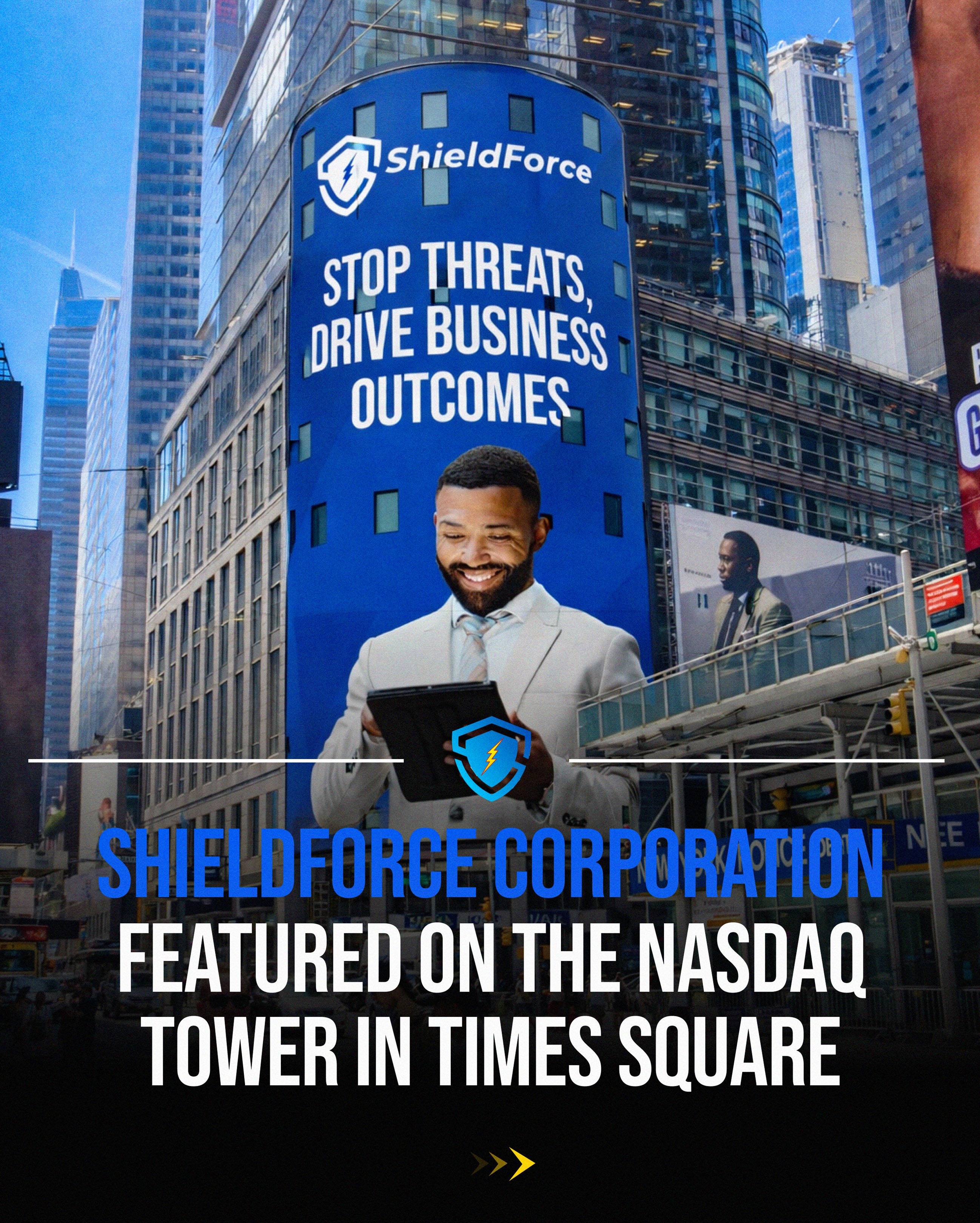
ShieldForce Corporation launched in May 2023 in Boston, Massachusetts, securing its first customers within weeks. The company was founded to close a gap Obi Ibeto identified while researching his master's…
Read More
The conversation between a private equity-backed home health company and its portfolio management team about cybersecurity has changed materially in the past three years. What was once a periodic compliance…
Read More
A home health organization that operates in New York, New Jersey, Connecticut, and Pennsylvania is not managing one cybersecurity compliance environment. It is managing four state-level data breach notification frameworks…
Read More
I respect the instinct to build things yourself. It reflects a resourcefulness and self-sufficiency that serve home health organizations well in many areas of operations. In cybersecurity, the DIY approach…
Read More
One of the questions I hear most often from home health administrators, hospice agency owners and nursing homes associations considering ShieldForce is: "How long until we're actually protected?" The answer…
Read More
A general IT managed service provider serves a portfolio of clients that might include a manufacturing company, a law firm, a retail chain, and a home health agency. The team…
Read More
When field nurses access patient records from personal devices on home Wi-Fi networks, it creates HIPAA compliance gaps that most agencies haven't addressed. Here's how to close them without disrupting care delivery.
Read More
The proposed 2026 HIPAA Security Rule update would change several requirements from \"addressable\" to mandatory — with direct implications for hospice agencies. Here's what the proposed rule contains and how your agency should prepare.
Read More
eClinicalWorks, Greenway Health, and NextGen are the three EHR platforms that serve the majority of the Federally Qualified Health Center market in the United States. Each has been selected by…
Read More
HRSA's Health Center Program requirements have always addressed patient information protection as a component of the broader operational standards that FQHCs must meet. What has changed in 2026 is the…
Read More
A Federally Qualified Health Center serving 12,000 patients annually in a rural county is legally required to implement the same HIPAA Security Rule requirements as a major urban hospital system…
Read More
Hospice pharmacy management involves a category of patient data that sits at the intersection of two distinct regulatory frameworks: HIPAA's privacy and security requirements for protected health information, and the…
Read More
In twenty-three years of hospice cybersecurity work, I have never had a hospice administrator proactively raise the security of chaplaincy documentation as a priority. It is always my observation, not…
Read More
Hospital and health system discharge planning teams have become inadvertent cybersecurity assessors. In the wake of high-profile healthcare supply chain breaches — most consequentially the Change Healthcare incident that disrupted…
Read More
Hospice M&A activity has accelerated significantly over the past three years, driven by private equity consolidation, regional health system acquisitions, and the operational pressure that smaller independent hospices face competing…
Read More
The CMS Conditions of Participation require hospice agencies to provide bereavement services to surviving families for a period of no less than one year following the patient's death. This requirement…
Read More
In October 2024, a mid-size hospice organisation in the Mid-Atlantic region experienced a ransomware attack that rendered their EHR inaccessible for eleven days. During those eleven days, the hospice was…
Read More
Hospice compliance officers typically maintain two separate compliance frameworks in parallel: the CMS Conditions of Participation framework, which governs clinical quality, patient rights, and care delivery standards; and the HIPAA… <strong>Related CMS Requirement Guide for Other Vertical:</strong> <a href="/blog/cms-conditions-of-participation-home-health-cybersecurity-medicare-2026" title="Home Health version">Home Health version</a>
Read More
Brightree and MatrixCare serve significant portions of the hospice EHR market alongside Axxess — each with genuine clinical capability and legitimate security programmes at the application level. The pattern I…
Read More
The interdisciplinary group meeting is the clinical and ethical centre of hospice care — the regular gathering where physician, nurse, social worker, chaplain, aide, and bereavement coordinator review each patient's…
Read More
Hospice care is, at its core, about accompanying people through the most profound human experience — the dying process. The information that hospice organisations collect and manage to provide that…
Read MoreNew York's Value-Based Payment transformation is reshaping how home health agencies are compensated — moving from a pure fee-for-service model toward outcome-based arrangements that reward agencies for keeping patients healthy,…
Read More
RHIO compliance reviews are no longer a rare occurrence at SHIN-NY participating home health agencies. All four New York RHIOs have expanded their compliance review programmes in response to increasing…
Read More
The compliance-focused discussion of SHIN-NY sometimes obscures a more fundamental point: SHIN-NY participation exists to improve patient care, not to create compliance obligations. The security requirements that come with SHIN-NY…
Read More
New SHIN-NY participants consistently underestimate the documentation intensity of the onboarding process. The agencies I have seen complete onboarding smoothly — in 60 days or less — are the ones…
Read More
When a security incident potentially involves SHIN-NY health information exchange data, the notification obligations that arise are parallel to — not instead of — HIPAA notification obligations. This distinction matters…
Read More
A home health agency serving patients in both the Capital Region and the Finger Lakes region of New York may find itself participating in two separate RHIO networks — Hixny…
Read More
A home health administrator in Syracuse told me recently that her agency had passed its SHIN-NY renewal without any findings and was therefore confident in its HIPAA compliance. I did…
Read More
The Rochester RHIO serves Western New York including Monroe, Livingston, Ontario, Seneca, Wayne, and Yates counties — one of the most medically integrated regional health markets in New York State,… <strong>Related RHIO Guides for Other NY Regions:</strong> <a href="/blog/healtheconnections-cspp-home-health-central-new-york-syracuse-compliance" title="HealtheConnections/Syracuse (Central NY)">HealtheConnections/Syracuse (Central NY)</a> | <a href="/blog/how-to-complete-the-healthix-cspp-a-field-guide-for-nyc-and-long-island-home-health-agencies" title="Healthix (NYC & Long Island)">Healthix (NYC & Long Island)</a>
Read More
HealtheConnections is the SHIN-NY RHIO serving Central New York — a region that includes Onondaga, Oswego, Madison, Cayuga, Cortland, Jefferson, Lewis, and surrounding counties. For home health agencies serving the… <strong>Related RHIO Guides for Other NY Regions:</strong> <a href="/blog/rochester-rhio-cspp-home-health-western-new-york-monroe-county" title="Rochester/Monroe County (Western NY)">Rochester/Monroe County (Western NY)</a> | <a href="/blog/how-to-complete-the-healthix-cspp-a-field-guide-for-nyc-and-long-island-home-health-agencies" title="Healthix (NYC & Long Island)">Healthix (NYC & Long Island)</a>
Read More
Healthix is the largest New York RHIO by patient population, serving New York City's five boroughs, Long Island, and portions of the Hudson Valley. The breadth and complexity of the… <strong>Related RHIO Guides for Other NY Regions:</strong> <a href="/blog/rochester-rhio-cspp-home-health-western-new-york-monroe-county" title="Rochester/Monroe County (Western NY)">Rochester/Monroe County (Western NY)</a> | <a href="/blog/healtheconnections-cspp-home-health-central-new-york-syracuse-compliance" title="HealtheConnections/Syracuse (Central NY)">HealtheConnections/Syracuse (Central NY)</a>
Read More
SHIN-NY's cybersecurity requirements for participating home health agencies have continued to evolve through 2025 and into 2026, driven by two parallel forces: the 2026 HIPAA Security Rule mandatory updates, which raised the baseline security standard that SHIN-NY compliance reviewers expect to see documented;
Read More
The decision to pay a ransomware demand is one of the most consequential choices a home health administrator will ever face — made under enormous time pressure, with incomplete information,…
Read More
Annual penetration testing became a mandatory HIPAA Security Rule requirement in 2026, and many home health administrators are encountering the requirement for the first time during their current compliance review…
Read More
SHIN-NY annual renewal is the compliance event that most New York home health agencies handle reactively — receiving the renewal notice from their RHIO and scrambling to update documentation that…
Read More
Email domain spoofing is one of the simplest attacks available to cybercriminals — and one of the most consistently underdefended vulnerabilities at home health agencies. Without DMARC, DKIM, and SPF…
Read More
Sophisticated ransomware groups do not select targets randomly. They spend days or weeks conducting open-source intelligence gathering — collecting publicly available information about potential targets to assess their data value,…
Read MoreThe credential theft data is consistent across every home health sector threat analysis I have reviewed: password reuse between work accounts and consumer websites is the most common credential exposure…
Read More
CMS CoP requirements include patient information protection provisions that connect directly to cybersecurity. Here is how a strong security program supports CoP readiness. <strong>Related CMS Requirement Guide for Other Vertical:</strong> <a href="/blog/cms-conditions-of-participation-hospice-cybersecurity-surveyors-2026" title="Hospice version">Hospice version</a> <strong>Related Requirements for Agencies in Both Programs:</strong> <a href="/blog/ny-medicaid-managed-care-cybersecurity-home-health" title="Medicaid (NY) guide">Medicaid (NY) guide</a>
Read More
The conversation about "remote work cybersecurity" has been dominated for the past five years by the image of a corporate employee working from a home office — a professional at…
Read More
Data retention is the compliance obligation that home health administrators most consistently defer until something forces them to address it. The forcing functions are rarely pleasant: an OCR audit requests…
Read More
I have sat in on enough home health agency board meetings to know that cybersecurity reporting — when it happens at all — tends to follow one of two patterns.…
Read More
New York's Stop Hacks and Improve Electronic Data Security Act — the SHIELD Act — became effective March 21, 2020, and applies to any person or business that owns or…
Read More
Of all the security compliance failures I encounter at home health agencies, the persistence of former employee access is simultaneously the most common, the most preventable, and the most likely…
Read More
A home health franchise organisation that operates thirty locations faces a cybersecurity challenge that is qualitatively different from the challenges facing a single-location agency. The single-location agency controls one environment,…
Read More
Artificial intelligence tools have entered home health operations at a pace that has significantly outrun the compliance frameworks most agencies have in place to govern their use. Care coordinators use…
Read More
For most of the history of HIPAA enforcement, the primary legal consequence of a home health data breach was an OCR investigation and potential civil monetary penalty. Class action litigation…
Read More
Not all vendor risks are equal. Here is a tiered vendor scorecard for home health agencies — allocating scrutiny proportional to each vendor's level of ePHI access.
Read More
The 2026 HIPAA Security Rule mandates MFA for all ePHI access. Not all MFA is equal — here is why SMS codes fall short, what stronger options exist, and how to deploy them to field staff.
Read More
HITRUST is becoming a hospital-referral differentiator for home health agencies. Here is the step-by-step roadmap from HIPAA compliance to HITRUST e1 certification.
Read MoreA confirmed data breach triggers strict notification obligations within 60 days, 72 hours, and immediately. Here is exactly what home health agencies must do to stay HIPAA compliant. This incident response guide complements the proactive approach outlined in: <a href="/blog/hipaa-security-risk-assessment-home-health-agency-guide" title="HIPAA Risk Analysis & Assessment: Complete Step-by-Step Guide for Home Health Agencies">HIPAA Risk Analysis & Assessment: Complete Step-by-Step Guide for Home Health Agencies</a>
Read More
Hospital discharge planners increasingly prefer home health agencies that can demonstrate cybersecurity compliance. Here's how a strong security posture becomes a competitive advantage for referrals.
Read More
The proposed 2026 HIPAA Security Rule would make MFA, encryption, and annual pen testing mandatory once finalized. Use this complete checklist to close every gap before your next OCR audit or insurance renewal.
Read More
Phishing email drives the majority of home health data breaches. Here is the layered email security approach that stops credential theft, domain impersonation, and BEC attacks.
Read More
Cyber insurance underwriters are tightening requirements for home health agencies. Here is what carriers now demand — and how to qualify for maximum coverage at the best premium.
Read More
Ransomware, BEC, and credential theft dominate the 2026 home health threat landscape. Here is current attack data on frequency, cost, targets, and what controls stop each threat type.
Read More
Pediatric home health patients face unique privacy risks — their health data has a decades-long exposure window. Here's what extra security and HIPAA protections are required for agencies serving children.
Read More
New York Medicaid managed care organizations are adding cybersecurity requirements to provider agreements. Here's what NY home health agencies must demonstrate to maintain managed care contracts. <strong>Related Requirements for Agencies in Both Programs:</strong> <a href="/blog/cms-conditions-of-participation-home-health-cybersecurity-medicare-2026" title="Medicare guide">Medicare guide</a>
Read More
Home health agency acquisitions create hidden cybersecurity liability. Here's the cyber due diligence checklist every buyer needs before closing a deal.
Read More
State health department surveyors are increasingly reviewing cybersecurity documentation during home health agency surveys. Here's exactly what they look for and how to be prepared.
Read More
Generic IT security doesn't understand HIPAA, SHIN-NY, or how home health agencies actually work. Here's why purpose-built healthcare cybersecurity delivers better protection and better compliance outcomes.
Read More
The first 24 hours of a cybersecurity incident determine whether your home health agency pays a ransom, notifies patients, and faces OCR — or contains the damage and recovers clean.
Read More
Choosing a managed security provider for your home health agency is a high-stakes decision. Here's the complete evaluation framework — what to ask, what to avoid, and what separates specialists from generalists.
Read More
Home health agencies focus on their own security — but vendor breaches are now the leading cause of healthcare data exposure. Here's how to manage third-party cyber risk in 2026.
Read More
Generic security training doesn't work for home health care teams who learn on mobile devices between patient visits. Here's how to design training that sticks and satisfies HIPAA.
Read More
Telehealth visits by home health agencies create specific HIPAA security obligations. Here's how to secure video visits, remote monitoring data, and digital patient communication in 2026.
Read More
Home health agencies that run clinical systems and guest WiFi on the same network are one compromised device away from a full breach. Here's what network segmentation is and how to implement it.
Read More
A HIPAA Security Rule risk assessment is the foundation of every compliant home health security program — and the first document OCR investigators request. Here's how to conduct one correctly.
Read More
Home health scheduling departments are a prime target for social engineering. Attackers impersonate patients, families, physicians, and Medicare officials to extract information and gain system access.
Read More
SOC 2 and HIPAA are both security frameworks — but they serve different purposes. Home health agencies need to understand both when evaluating technology vendors and cybersecurity providers.
Read More
Ransomware groups have a specific playbook for compromising home health EHR systems. Understanding how attacks unfold is the first step to stopping them.
Read More
Third-party billing companies that handle home health claims are a major HIPAA compliance risk. Here's what agencies must know about securing the billing relationship.
Read More
FQHCs don't have hospital IT budgets — but they face the same cybersecurity threats. Here's how community health centers access enterprise-grade protection within safety-net financial constraints.
Read More
AI tools like ChatGPT and Microsoft Copilot are entering home health agencies. Here's what HIPAA requires before any AI tool can touch patient data — and what the risks are.
Read More
Hospice volunteers who access patient scheduling, names, and contact information are handling PHI and are frequently left out of HIPAA security programs. Here's how to fix that.
Read More
Pediatric hospice patients are minors with terminal diagnoses — their records require heightened security and privacy protections beyond standard HIPAA requirements. Here's what pediatric hospice agencies must do.
Read More
FQHCs using telehealth platforms for virtual visits face unique HIPAA risks. Here's how to secure telehealth for community health centers without disrupting care delivery.
Read More
Home health agency boards are increasingly expected to oversee cybersecurity posture. Here's how to present SHIN-NY compliance progress to your board in terms they understand and can act on.
Read More
New York's four RHIOs — Hixny, Rochester RHIO, HealtheConnections, and Healthix — each have specific SHIN-NY compliance processes. Here's what home health agencies need to know about each one.
Read More
SHIN-NY cybersecurity requirements apply to home health agencies of every size. Here's a right-sized compliance approach for small New York home health agencies with under 25 staff and no IT department.
Read More
Axxess is a widely used hospice software platform — but its security doesn't extend to your devices, networks, or staff behavior. Here's the security layer your hospice agency must build around Axxess.
Read More
Your SHIN-NY CSPP must include an incident response plan — and your RHIO reviews it. Here's what to include to write a plan that satisfies RHIO requirements and actually works when you need it.
Read More
Cheap cybersecurity tools leave home health agencies exposed to HIPAA violations, ransomware, and six-figure breach costs. Here is the real price of cutting corners on security.
Read More
Managed Detection and Response goes far beyond antivirus for home health agencies, providing 24/7 human-monitored threat detection and active response. Here's what it is and what it costs.
Read More
AI-generated voice cloning attacks are now reaching home health billing departments, impersonating physicians, Medicare officials, and executives to authorize fraudulent transfers.
Read More
PointClickCare is widely used in home health and post-acute care, but its security doesn't cover your devices, networks, or staff. Here's what your agency must add to stay HIPAA-compliant.
Read More
OCR HIPAA penalties are accelerating in 2026. Here's what home health agencies are actually being penalized for and the specific documentation gaps that trigger six-figure fines.
Read More
The UnitedHealth Group breach exposed 190 million Americans. Here's what it means for home health agencies — including increased phishing risk, supply chain exposure, and patient notification obligations.
Read More
HIPAA Security Rule audits are increasing in 2026. Here's exactly how home health agencies should prepare — with the documents, controls, and evidence OCR investigators look for first.
Read More
Section 330 grants cover HIPAA cybersecurity as an allowable cost under 45 CFR Part 75 — here's the exact budget narrative language, cost ranges by health center size, and the documentation HRSA expects at review.
Read More
Federally Qualified Health Centers face the same ransomware and phishing threats as hospitals but with a fraction of the security resources. Here's the data — and what FQHCs must do in 2026.
Read More
Zero Trust security assumes no user or device is trusted by default — a model that fits home health perfectly. Here's how it works and what it means for your agency's HIPAA compliance.
Read More
FQHCs serving patients with substance use disorders face a dual privacy framework — HIPAA and 42 CFR Part 2. Here's what each requires and how to build a cybersecurity program that protects both.
Read More
The proposed 2026 HIPAA Security Rule update would make MFA mandatory for all ePHI access at FQHCs if finalized. Here's how to implement it across a diverse community health center workforce without disrupting clinical operations.
Read More
A backup is not a disaster recovery plan. Home health agencies need documented, tested recovery procedures that keep patient care running during a cybersecurity incident or technology failure.
Read More
HRSA site reviewers increasingly assess health information security as part of health center compliance reviews. Here's the cybersecurity documentation your FQHC must have ready before a visit.
Read More
Stolen home health credentials and patient data are actively sold on dark web forums. Here's how dark web monitoring works, what it finds, and why every home health agency needs it in 2026.
Read More
When CMS surveyors or OCR investigators visit your hospice, these are the documents and controls they request first. Use this checklist to ensure your agency is prepared.
Read More
Multi-site FQHCs face amplified cybersecurity complexity — each site is an additional attack surface. Here's how to manage HIPAA compliance across multiple locations without proportional IT headcount.
Read More
The Cherry Street Health Services ransomware attack exposed 182,000 patients at a Michigan FQHC. Here are the specific security failures that made it possible — and what every community health center must do differently.
Read More
The proposed 2026 HIPAA Security Rule update would create mandatory cybersecurity requirements for FQHCs — and HRSA grant conditions increasingly align with these standards. Here's what your health center should prepare for.
Read More
A practical, week-by-week 90-day roadmap for home health agencies with no IT department to achieve HIPAA-ready cybersecurity — covering the 2026 Security Rule update requirements.
Read More
New York has the most complex cybersecurity compliance stack for home health agencies. Here's how SHIN-NY and the SHIELD Act compare to what Massachusetts, Vermont, New Hampshire, and New Jersey require.
Read More
Choosing the wrong cybersecurity provider for your home health agency can leave you exposed. These 10 questions separate healthcare-specialized MSSPs from generic IT vendors.
Read More
A composite case study of how a ShieldForce-protected hospice agency detected and recovered from a ransomware attack without paying, without losing patient data, and without disrupting care delivery.
Read More
The real cost of a HIPAA breach for a home health agency goes far beyond the OCR fine. Here is a complete breakdown of financial exposure — from forensic investigations to lost revenue — with 2026 figures.
Read More
Hospice agencies are among healthcare's most targeted ransomware victims — and the consequences go beyond data. Here's why attackers target hospice specifically and what meaningful protection looks like.
Read More
Brightree is a widely used hospice EHR, but vendor security doesn't protect your devices, networks, or staff. Here's the security layer your hospice agency must build around Brightree.
Read More
Hospice field staff frequently work with devices containing sensitive patient data in patient homes and community settings. Here's how to build a practical device security policy that works in the field.
Read More
Hospice patient records contain irreplaceable, deeply personal information — terminal diagnoses, advance directives, family dynamics. Here's why this data requires exceptional protection and what that means for your security program.
Read More
Netsmart myUnity is a leading hospice EHR — but vendor security doesn't cover your devices, networks, or staff behavior. Here's what hospice agencies must add to be HIPAA-compliant.
Read More
Hospice agencies face tightening cyber insurance underwriting in 2026. Here's exactly what controls carriers require — and what misrepresentation on your application means for your coverage.
Read More
SHIN-NY requires documented security awareness training for all workforce members with access to health information exchange data. Here's what the training must cover and how to make it practical for field staff.
Read More
New York home health agencies face three overlapping cybersecurity frameworks simultaneously: HIPAA, SHIN-NY, and the NY SHIELD Act. Here's how they interact and how to build one program that satisfies all three.
Read More
A confirmed breach affecting SHIN-NY data triggers specific notification obligations to your RHIO, OCR, and potentially affected individuals. Here's the exact timeline and process for NY home health agencies.
Read More
CMS Conditions of Participation don't explicitly list cybersecurity — but surveyors increasingly cite inadequate data protection as a deficiency. Here's what hospice agencies must document to pass a survey in 2026.
Read More
SHIN-NY requires audit logs for all access to health information exchange data — with specific retention, review, and documentation obligations. Here's exactly what your New York home health agency needs.
Read More
A ransomware attack on a home health agency doesn't just lock files — it stops care. Here's the real sequence of events when attackers strike, and what protection looks like before, during, and after.
Read More
The SHIN-NY Cybersecurity Policies and Procedures Program (CSPP) is the foundational compliance document for every New York home health agency participating in SHIN-NY. Here's what it contains, why it matters, and how to build one.
Read More
SHIN-NY compliance has real costs — but so does non-compliance. This guide breaks down the realistic budget for a New York home health agency to achieve and maintain SHIN-NY cybersecurity requirements in 2026.
Read More
Non-compliance with SHIN-NY cybersecurity requirements carries real consequences — from RHIO suspension to HIPAA penalties. Here's what enforcement actually looks like for New York home health agencies.
Read More
A complete SHIN-NY compliance checklist for New York home health agencies — covering every CSPP requirement, technical control, and documentation obligation. Use this to assess your readiness before your RHIO review.
Read More
SHIN-NY and HIPAA are not the same compliance obligation. New York home healthcare agencies must satisfy both — and the requirements don't always overlap. Here's a clear, side-by-side comparison.
Read More
SHIN-NY cybersecurity requirements are now enforceable for New York home healthcare agencies. This definitive guide explains every control, deadline, and documentation obligation — in plain English.
Read More
SHIN-NY requires MFA for all users accessing health information exchange data. Here's what that means in practice for nurses, billing staff, and administrators — and how to implement it without disrupting care.
Read MoreThe expected 2026 HIPAA Security Rule update could raise cybersecurity expectations for home healthcare agencies. Learn how to prepare for ePHI protection, MFA, risk analysis, vendor oversight, backup, and incident response. <strong>Related HIPAA 2026 Update Guide for Other Vertical:</strong> <a href="/blog/2026-hipaa-security-rule-hospice-agency-requirements" title="Hospice version">Hospice version</a>
Read MoreUnitedHealth Group delivered 19 million in-home visits in 2025. For home healthcare agencies, this signals a permanent shift in care delivery — and a rising standard for cybersecurity, HIPAA readiness, and digital resilience.
Read More
Home care agencies are carrying more digital responsibility than ever before. Patient records, schedules, billing information, caregiver communication, payroll, referral data, and family updates now move across multiple systems —…
Read More
Introduction: Attacks No Longer Happen in One Place Cyberattacks used to be simple. An attacker sent a malicious file, it landed on an endpoint, and antivirus software either stopped it,…
Read More
Not All Data Loss Comes from Hackers When organizations think about data loss, they often picture external attackers breaking into systems and stealing information. In reality, many of today’s data loss incidents are caused by non-adversarial insiders…
Read More
The Inbox Is Still the Front Door Despite years of investment in cybersecurity tools; email remains the number one entry point for cyberattacks. As Phishing, Business E-mail Compromise (BEC), and malicious attachments continue to evolve...
Read More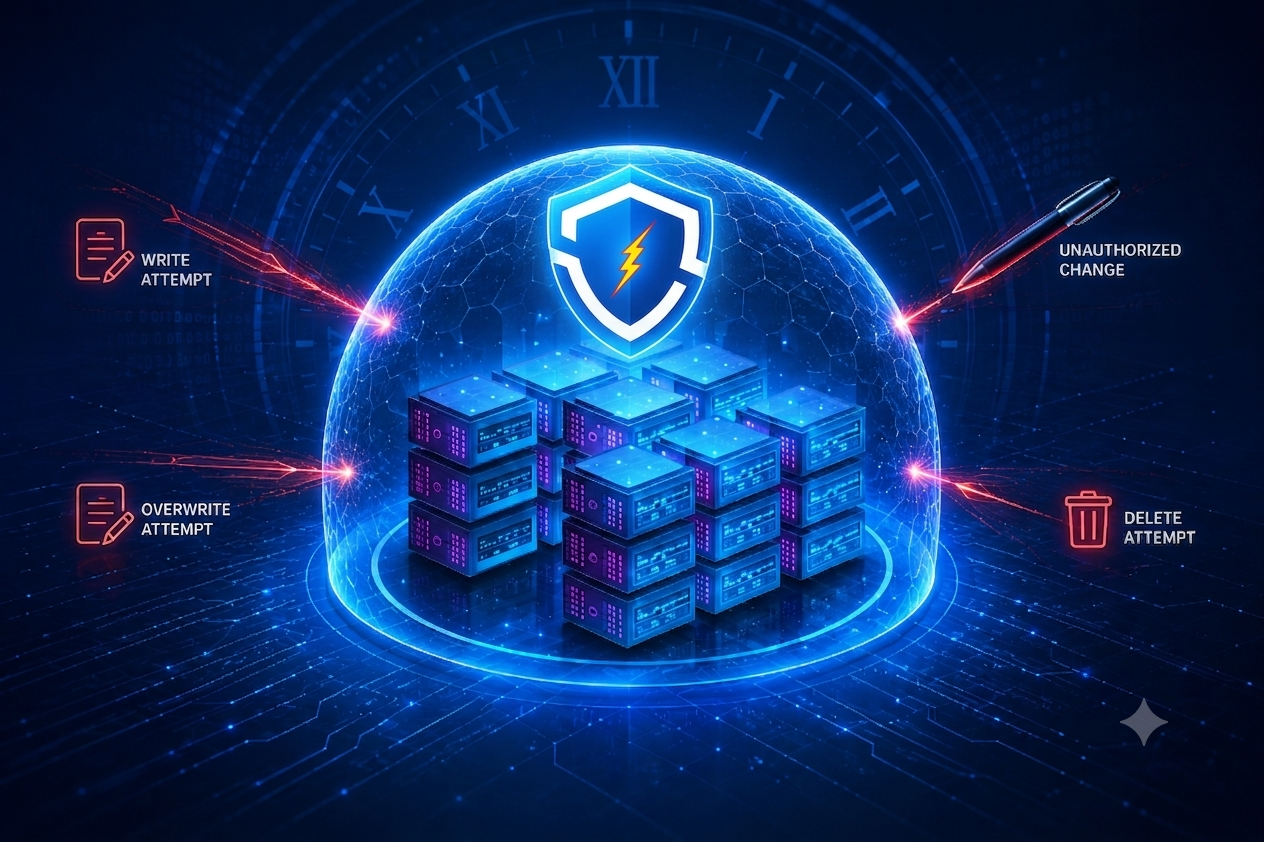
Silent data loss often goes undetected until retention policies expire and recovery is no longer possible. This real‑world recovery scenario shows why immutable backups are essential for long‑term protection and how ShieldForce ensures data integrity beyond native platform limits...
Read MoreCovenant Health initially reported 8,000 affected individuals. Forensic review revealed 478,000. That gap is not just a larger notification list — it is a HIPAA compliance crisis. Here is what every New England home health agency must learn from it.
Read More
The Ingram Micro ransomware attack demonstrated that restoring systems is no longer enough — because data was stolen before encryption. Here is what double-extortion means for home health agencies and how to defend against both threats simultaneously.
Read More
Most home health agencies think about immutable backup as ransomware defense. Silent data corruption — corrupted backups discovered weeks after the damage — is the threat most backup strategies miss entirely.
Read More
Healthcare organisations are increasingly targeted by cyber criminals not only because of the value of patient data, but because healthcare systems often prioritize availability over security. The recent cyber-attack on Canopy Health highlights critical weaknesses that exist across many healthcare e...
Read MoreCyberattacks cost home health agencies $154,000–$325,000 per incident in direct losses — before VBP penalties, referral loss, and staff turnover. Here is the prevention architecture that stops attacks before financial damage occurs
Read More
Advanced persistent threats in healthcare maintain unauthorized access for 18–21 days before striking. Here is how APTs target home health agencies specifically — and the detection architecture that stops them before detonation.
Read More
A new phishing technique active since September 2025 bypasses MFA without stealing passwords — by tricking users into entering a code on Microsoft's real website. Here is how it works, why home health staff are prime targets, and how to stop it.
Read More
Home health email inboxes receive physician orders, payer updates, and EHR notifications from dozens of external partners daily — making them the most targeted attack surface in your agency. Here is how to protect nurses and admins without disrupting care
Read More
Home health agencies that bolt privacy controls onto existing workflows consistently face the same compliance gaps. Here is how privacy by design — embedding protection into clinical operations from the start — produces better HIPAA outcomes with less staff friction
Read More
Home health field nurses work across patient homes, vehicles, and personal devices — environments that standard antivirus cannot protect. Here is why behavioral EDR is the 2026 HIPAA mandatory standard and what it means for agencies with distributed clinical workforces
Read More
Most home health agencies believe their backups work because the software reports success. Here is what actually determines whether you can recover — and the two healthcare case studies that prove why it matters.
Read MoreWhat your agency needs to know and how to stay protected. Home healthcare agencies are becoming one of the top targets for cybercriminals in 2025. Why? Because they collect sensitive patient information, rely heavily on mobile caregivers, and often don’t have the same security resources that large h...
Read More
Healthcare has been the most breached industry for thirteen consecutive years. Home health agencies face the same threats as hospitals with a fraction of the security infrastructure. Here is what that means for patient safety, HIPAA compliance, and agency survival.
Read More