
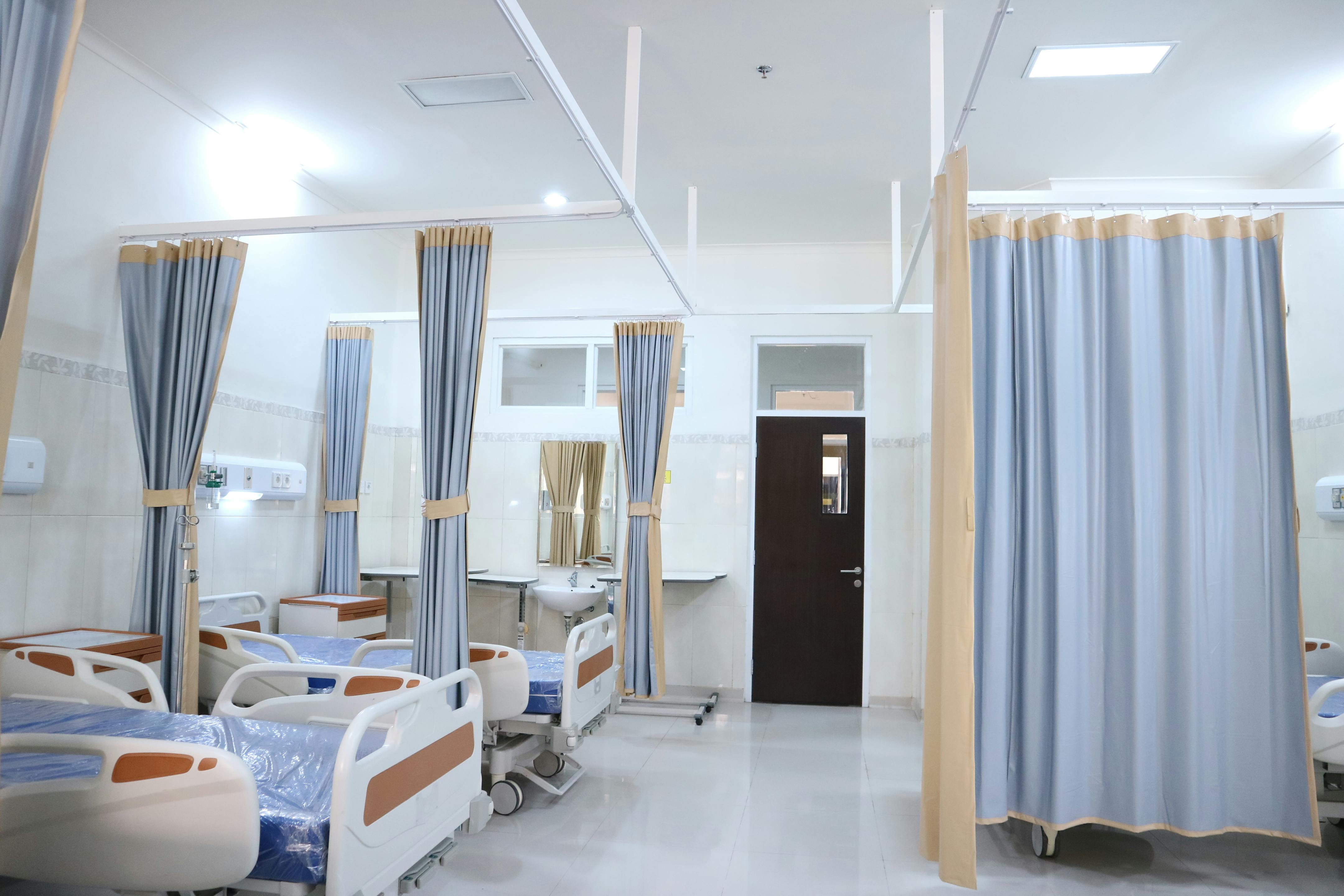
HRSA's Health Center Program requirements have always addressed patient information protection as a component of the broader operational standards that FQHCs must meet. What has changed in 2026 is the depth and specificity with which HRSA operational site visits examine information security — a shift driven by the regulatory environment (the 2026 HIPAA mandatory updates), the threat environment (increased ransomware targeting of community health centres, particularly Federally Qualified Health Centers serving rural and underserved populations), and the accumulated experience of watching health centre program compliance problems traced to cybersecurity failures.
The HRSA project officers and reviewers I interact with in the community health centre space consistently describe a more security-attentive review environment in 2026 than in prior years. Questions about information systems, data security, and business continuity that were peripheral in prior site visits are now expected elements of operational capacity review. FQHCs that are prepared for these questions navigate site visits confidently. Those that are not are being flagged for programme compliance concerns in areas they did not expect to be scrutinised.
This article covers three things: the relationship between HRSA programme compliance and HIPAA compliance, a complete answer framework for every cybersecurity question appearing in 2026 HRSA site visits, and the connection between cybersecurity documentation and UDS reporting obligations that most health centre administrators have never made explicit.
The HRSA-HIPAA Relationship: One Programme Satisfying Both
HRSA Health Center Programme compliance and HIPAA compliance are distinct regulatory frameworks that share significant overlap in patient information protection. HRSA operational standards require health centres to maintain appropriate safeguards for patient information as a component of organisational quality. HIPAA Security Rule compliance is how those safeguards are specifically implemented and documented for electronically stored and transmitted patient information.
A health centre that is fully HIPAA-compliant has satisfied HRSA's patient information protection requirements as a byproduct — because HIPAA's requirements exceed what HRSA's operational standards specifically require for information security. The practical implication: maintain one integrated compliance programme that explicitly cross-references its HRSA compliance function, and present it to HRSA reviewers as the mechanism through which the health centre meets its information protection obligations under both frameworks simultaneously.
The additional value of making this cross-reference explicit — in the health centre's compliance documentation and in conversations with HRSA project officers and reviewers — is that it allows the health centre to point to its HIPAA compliance programme as direct evidence of HRSA programme compliance in the patient information protection area. Rather than treating HIPAA and HRSA compliance as two separate documentation exercises, one integrated compliance programme serves both purposes.
What HRSA Site Visit Reviewers Ask — and How to Answer
Based on current HRSA operational site visit protocols and post-visit debriefs from health centres across the field, the cybersecurity questions appearing most frequently in 2026 site visits fall into four categories. For each question, I provide the answer framework that demonstrates genuine compliance versus the response pattern that signals documentation without implementation.
Question 1: "Does the health centre have a designated HIPAA Security Officer with an active programme management role?"
What a confident answer looks like: "Yes. [Name] serves as our HIPAA Security Officer. Their active programme management responsibilities include conducting the annual risk analysis, managing our compliance calendar, reviewing the quarterly access audit, serving as the primary contact for our managed security provider, and serving as the primary contact for HRSA and OCR compliance matters. [Name] has held this role since [date] and completed [relevant training or certification] in [year]."
What signals an unprepared response: "[Name] is our HIPAA Security Officer" — with no description of what the role involves in practice. A designation without an active programme management role is a compliance designation, not a compliance programme. Reviewers who hear the name without the programme description ask follow-up questions that are more difficult to answer.
Question 2: "When was the health centre's most recent HIPAA Security Rule risk analysis conducted, and what were the key findings?"
What a confident answer looks like: "Our most recent risk analysis was completed in [month/year] by our HIPAA Security Officer with support from our managed security provider. The analysis covered all systems that create, receive, maintain, or transmit ePHI across our [number] service lines. Key findings included [two or three specific findings] — all of which have been addressed through [specific controls]. Our risk management plan is current and the risk analysis will be refreshed in [next scheduled date] or sooner if significant operational changes occur."
What signals an unprepared response: "We completed a risk analysis last year." No date, no scope, no findings summary, no remediation status. This answer tells the reviewer that the risk analysis may exist but the organisation is not actively managing the programme it describes.
Question 3: "What happens to patient care if the electronic health record system becomes unavailable for 24 hours or longer?"
What a confident answer looks like: "We have documented clinical downtime procedures that all clinical staff are trained on. During a system outage, clinical staff switch to paper-based visit documentation using standardised downtime forms that we maintain at each clinical site. Medication orders are managed through our verbal order protocol with the attending physician. Patient scheduling continues through our manual scheduling backup. When systems are restored, downtime documentation is entered into the EHR through a defined reconciliation process. We practise these procedures in our annual tabletop exercise. I can provide you with our downtime procedures documentation."
What signals an unprepared response: "We would contact our IT vendor and wait for the system to come back up." This answer tells the reviewer that the health centre has no clinical downtime bridge — no way to continue serving patients during an extended outage. For a health centre serving underserved populations where alternative care options are limited, this is a patient access concern as much as a compliance concern.
Question 4: "Has the health centre experienced any security incidents in the past 12 months, and if so, how were they managed?"
What a confident answer looks like (no reportable incidents): "We have not experienced any reportable HIPAA breaches in the past 12 months. Our security monitoring programme detected and investigated [number] security events during this period — [brief description of event types] — all of which were assessed through our four-factor breach risk assessment process and determined not to constitute reportable breaches. Documentation of each event and its assessment is maintained in our security incident log."
What a confident answer looks like (prior incident): "We experienced a [type of incident] in [month/year]. We completed the HIPAA four-factor breach risk assessment, notified [number] affected individuals within the 60-day HIPAA deadline, and submitted our breach notification to HHS OCR. Following the incident, we implemented [specific programme changes]. Our security programme has been independently reviewed since the incident and no further reportable events have occurred."
What signals an unprepared response: "We haven't had any problems." No incident log, no documented assessment process, no evidence of active monitoring. This answer tells the reviewer that the health centre is not systematically monitoring for and evaluating security events — which means the "no problems" statement reflects absence of detection, not absence of incidents.
The HRSA Cybersecurity Documentation File: What to Have Ready
Prepare a designated HRSA site visit cybersecurity documentation file that a reviewer can access within minutes of a site visit request — not assembled in response to the visit. The file should contain:
• HIPAA Security Officer designation letter: the formal designation naming the Security Officer, their title, contact information, the date of designation, and a one-paragraph description of their active programme management responsibilities
• Most recent risk analysis: the complete document, not a summary. Reviewers increasingly ask to see the full risk analysis rather than accepting a description. The document should be clearly dated, with the scope, methodology, findings, and remediation status visible
• Risk management plan: the current remediation tracking document showing the status of each identified risk, the control implemented or planned, the responsible party, and the target completion date for any open items
• 2026 HIPAA mandatory controls implementation evidence: a one-page summary confirming the implementation date of each mandatory control — MFA enforcement (with the enforcement mechanism named), behavioral EDR (with the deployment coverage), biannual vulnerability scanning (with the most recent scan date), annual penetration testing (with the most recent test date and firm credentials), technology asset inventory (with the last update date)
• Security awareness training records: individual completion records or an aggregate summary with total enrolled, completion count, completion date, and training content description for the current compliance year
• Clinical downtime procedures: the documented procedures themselves — not a reference to their existence — so the reviewer can confirm they are specific, comprehensive, and appropriate for the health centre's clinical operations
• Business Associate Agreement inventory: the current list of vendors with ePHI access and BAA status, with execution dates
• Incident log: documentation of all security events assessed in the current compliance period, with the four-factor risk assessment outcome for each
The UDS Reporting Connection: Cybersecurity and Health Center Operational Capacity
The Uniform Data System is HRSA's annual reporting mechanism for health centre programme data — the comprehensive report that every FQHC submits covering patient demographics, clinical quality measures, staffing, financial performance, and operational infrastructure. The connection between UDS reporting and cybersecurity is not explicit in the UDS reporting instructions, but it is present in the operational capacity framework that HRSA uses to assess health centre programme compliance.
How Cybersecurity Appears in UDS Operational Capacity Assessment
HRSA's assessment of health centre operational capacity — the organisation's ability to maintain and grow its health centre programme operations — includes evaluation of infrastructure and information management systems. A health centre that cannot demonstrate basic information security capability is demonstrating an operational capacity gap in the information management infrastructure that supports programme delivery.
The specific UDS data elements most directly affected by cybersecurity programme quality:
• Table 9A (Clinical Quality Measures): Clinical quality measure data is generated by the EHR and reported through the UDS. A ransomware attack that disrupts EHR access during the UDS reporting period creates data quality gaps that affect the accuracy of quality measure reporting. Health centres with robust incident response and clinical downtime procedures maintain data quality through disruptions; those without them accumulate documentation gaps that compromise UDS reporting accuracy.
• Table 5 (Staffing): Workforce productivity data reported in Table 5 reflects the operational effectiveness of clinical operations. Cybersecurity incidents that disrupt clinical operations — EHR unavailability, billing system disruption, staff time diverted to incident response — affect the productivity metrics that Table 5 captures. A health centre with a history of significant cyber disruptions will see this reflected in staffing efficiency data.
• Table 8A/8B (Financial Performance): Billing and revenue cycle data reported in Tables 8A and 8B is directly affected by billing system security. A ransomware attack that disrupts billing operations creates revenue recognition timing gaps that affect financial reporting accuracy. Health centres with immutable backup and tested restoration capability for billing systems maintain financial reporting continuity; those without it accumulate financial reporting inconsistencies.
Using Cybersecurity Documentation in UDS Narrative Reporting
HRSA provides health centres with opportunities to provide narrative context for operational challenges in their UDS submissions and in their ongoing project officer communications. Health centres that have experienced cybersecurity incidents during the reporting period should provide narrative context that describes: the nature of the incident, the duration of operational disruption, the patient care continuity measures that were in place, and the programme changes implemented following the incident. This narrative demonstrates that the health centre has an active, responsive security programme rather than a passive one — which is the distinction that HRSA programme compliance assessment cares about.
Health centres that have implemented significant security programme improvements during the reporting period — deploying the 2026 HIPAA mandatory controls, engaging a managed security provider, completing the first annual penetration test — should document this in their project officer communications as evidence of operational capacity investment. HRSA reviewers who see a health centre proactively investing in security programme infrastructure view this as a positive operational capacity indicator, not just a compliance action.
The HRSA Site Visit Preparation Protocol
The most effective preparation for the cybersecurity component of an HRSA operational site visit is not documentation assembly — it is programme knowledge. The HIPAA Security Officer who can answer questions about the security programme fluently, specifically, and from genuine operational knowledge demonstrates a programme that is being actively managed. The administrator who reads from the risk analysis document for the first time during the site visit demonstrates a programme that exists on paper.
Conduct an internal rehearsal of the site visit conversation at least 30 days before a scheduled visit — or annually as a standing preparation exercise if visits are unscheduled. The rehearsal should include: the HIPAA Security Officer answering each of the four question categories above without reference to documents; the executive director or CEO reviewing the cybersecurity documentation file and confirming they can describe the programme's key elements accurately; and a review of the UDS data for the past reporting period to identify any operational disruptions with cybersecurity causes that may generate follow-up questions.
ShieldForce prepares the complete HRSA site visit cybersecurity documentation file for every FQHC managed service client — the designation letter, the current risk analysis, the mandatory controls evidence summary, the training records, the incident log, and the downtime procedures — organised in the format that HRSA reviewers expect and updated continuously rather than assembled reactively before a visit. Start with a free assessment.
→ Schedule Your Free HIPAA Risk Assessment — shieldforce.io/hipaa-assessment
→ Explore Community Health Center Cybersecurity — shieldforce.io/community-health-centers
→ View Transparent Pricing from $35/user/month — shieldforce.io/pricing-comparison